Beginner Yoga Routine for Flexibility: Your 7-Day Plan
Feeling a bit stiff lately? Like your body’s whispering (or maybe shouting) for a little more give? You’re not alone. Many of us experience a loss of flexibility as we age or simply from our modern lifestyles. But what if you could significantly improve your range of motion and feel more fluid in your movements with just a few minutes each day, right in your own home? This beginner yoga routine for flexibility is designed precisely for that purpose. I’ve personally found immense benefits from consistent, gentle movement, and I’m excited to share a structured plan that can help you too. (Source: nih.gov, updated 2024 recommendations)
This isn’t about contorting yourself into pretzel shapes. It’s about listening to your body, respecting its current limits, and gradually encouraging it to open up. Whether you’re looking to touch your toes, ease back pain, or just feel more comfortable in everyday activities, a dedicated yoga practice can be transformative. Let’s get you moving and feeling better, one pose at a time.
Contents
- What is Flexibility and Why Does it Matter?
- How to Start Your Beginner Yoga Routine for Flexibility
- Day 1: Gentle Awakening
- Day 2: Hip Opener Focus
- Day 3: Spine Mobility
- Day 4: Hamstring & Leg Lengthening
- Day 5: Upper Body & Shoulder Release
- Day 6: Full Body Flow
- Day 7: Rest & Gentle Stretch
- Tips for Maximizing Your Flexibility Gains
- Common Mistakes to Avoid
- Frequently Asked Questions
- Ready to Move with More Ease?
What is Flexibility and Why Does it Matter?
Flexibility is the ability of your muscles and connective tissues to lengthen and allow your joints to move through their full range of motion. Think of it as the elasticity of your body. As we age, or due to inactivity, our muscles can shorten and tighten, leading to reduced mobility, stiffness, and even pain. This is where a beginner yoga routine for flexibility becomes incredibly valuable.
Improved flexibility offers a cascade of benefits. It can help prevent injuries by allowing your body to absorb shock better. Research from 2023 highlighted how regular stretching, like that found in yoga, can significantly reduce the risk of muscle strains and sprains, particularly in athletic populations. It can alleviate muscle soreness and reduce the risk of chronic pain, especially in the back and neck. Furthermore, increased range of motion can enhance athletic performance and simply make everyday tasks, like reaching for something on a high shelf or tying your shoes, feel effortless.
How to Start Your Beginner Yoga Routine for Flexibility
Starting is simpler than you might think. You don’t need fancy equipment or a dedicated yoga studio. All you need is a comfortable space, a yoga mat (or a rug/towel), and a willingness to move. Wear comfortable clothing that allows for freedom of movement. Most importantly, approach your practice with patience and self-compassion.
Consistency is key. Aim to practice daily, even if it’s just for 10-15 minutes. Listen to your body during each session. If something feels painful, ease back. Yoga is not about competition; it’s about your personal journey. Remember, the goal is gradual improvement, not instant perfection. We’ll be incorporating specific poses and flows throughout the week.
Day 1: Gentle Awakening
Today is about gently waking up your body and introducing it to movement. We’ll focus on simple stretches that don’t require much exertion but start to loosen up major muscle groups.
- Cat-Cow Pose (Marjaryasana-Bitilasana): Start on your hands and knees. Inhale as you drop your belly, arch your back, and look up (Cow). Exhale as you round your spine, tuck your chin, and draw your navel in (Cat). Repeat 5-10 times. This warms up the spine beautifully.
- Child’s Pose (Balasana): From hands and knees, bring your big toes to touch and widen your knees. Sink your hips back towards your heels and rest your forehead on the mat. Extend your arms forward or rest them alongside your body. Hold for 30-60 seconds, focusing on deep breaths.
- Gentle Seated Twist: Sit tall with legs extended. Bend your right knee and place your right foot outside your left thigh. Inhale to lengthen your spine, and exhale to twist your torso to the right, placing your right hand behind you. Hold for 3-5 breaths, then switch sides.
Day 2: Hip Opener Focus
Hips often hold a lot of tension. Today, we’ll focus on poses that help release tightness in the hip flexors and outer hips, which can significantly impact lower back health and overall mobility.
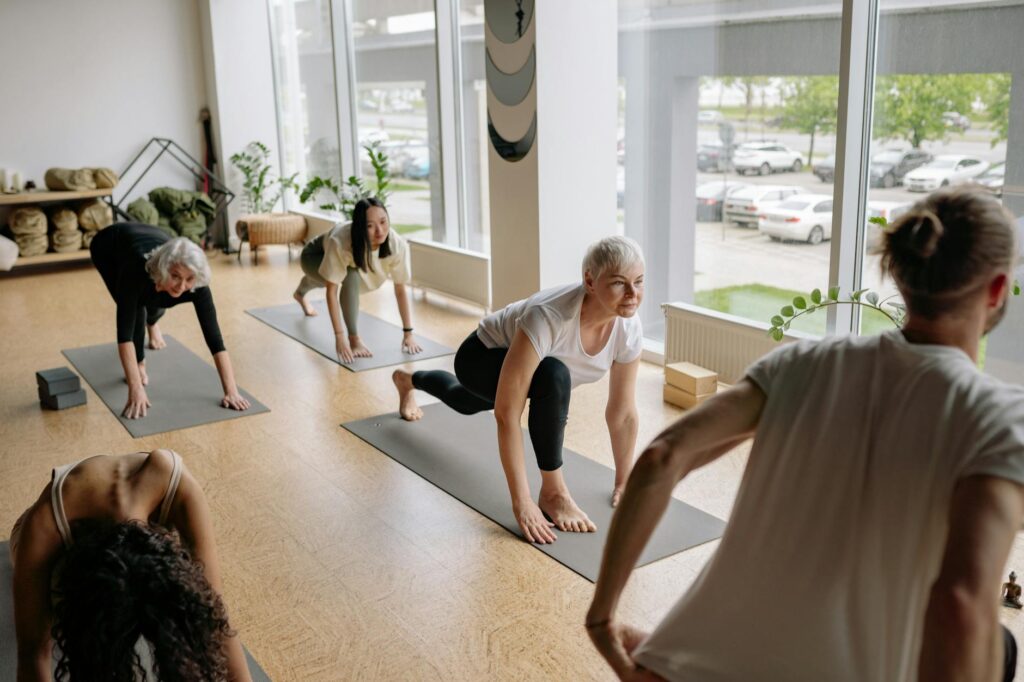
- Low Lunge (Anjaneyasana): From hands and knees, step your right foot forward between your hands. Lower your left knee to the mat (you can pad it with a blanket if needed). Keep your right knee stacked over your ankle. Feel the stretch in your left hip flexor. Hold for 30 seconds, then switch legs.
- Pigeon Pose Prep (Eka Pada Rajakapotasana Prep): From hands and knees, bring your right knee forward towards your right wrist, letting your right shin angle across your mat. Extend your left leg straight back. Keep your hips square to the front of the mat. You can stay upright or fold forward. Hold for 30-60 seconds, then switch sides.
Important: If Pigeon Pose is too intense, stick with the Low Lunge or try a Figure Four stretch while lying on your back (Reclined Pigeon). Never force your hips into a position that causes sharp pain.
Day 3: Spine Mobility
A mobile spine is crucial for almost every movement we make. Today’s routine targets spinal extension, flexion, and rotation, promoting better posture and relieving stiffness.
- Supine Spinal Twist: Lie on your back with knees bent and feet flat on the floor. Extend your arms out to the sides in a T-shape. Drop both knees to the right, keeping them bent. Turn your head to the left if comfortable. Hold for 30 seconds, breathing deeply, then switch sides.
- Sphinx Pose (Salamba Bhujangasana): Lie on your stomach with your legs extended. Place your elbows directly under your shoulders and forearms parallel on the mat. Gently lift your chest, keeping your hips on the floor. Feel a gentle opening in your chest and abdomen. Hold for 30-60 seconds.
Day 4: Hamstring & Leg Lengthening
Tight hamstrings are a common culprit for back pain and limited mobility. These poses gently encourage lengthening in the back of the legs.
- Standing Forward Fold (Uttanasana) with bent knees: Stand with feet hip-width apart. Soften your knees generously. Hinge at your hips and let your torso hang heavy. You can rest your hands on your shins, the floor, or interlace your fingers behind your head. Hold for 30-60 seconds, focusing on releasing tension in your spine and hamstrings.
- Reclining Hand-to-Big-Toe Pose (Supta Padangusthasana): Lie on your back. Loop a towel or strap around the ball of your right foot. Extend your right leg towards the ceiling, keeping a slight bend in the knee if needed. Keep your left leg extended on the mat or bent with the foot flat. Gently draw the extended leg towards you. Hold for 30-60 seconds, then switch sides.
Day 5: Upper Body & Shoulder Release
Modern life often leads to rounded shoulders and tight chest muscles. This session focuses on opening the chest and releasing tension in the shoulders and neck.
- Thread the Needle Pose (Urdhva Mukha Pasasana variation): Start on hands and knees. Inhale and reach your right arm up towards the ceiling. Exhale and thread your right arm underneath your left armpit, resting your right shoulder and ear on the mat. Keep your hips lifted. Hold for 30-60 seconds, then switch sides.
- Cow Face Pose Arms (Gomukhasana Arms): Sit comfortably. Reach your right arm up, bend your elbow, and let your hand fall behind your head. Reach your left arm out to the side, bend your elbow, and bring your left hand up your back. Try to clasp your fingers. If they don’t meet, use a strap or towel between your hands. Hold for 30 seconds, then switch arms.
Day 6: Full Body Flow
Today, we combine poses from the week into a gentle flow, linking breath with movement to build warmth and improve overall flexibility.
- Sun Salutation A (Surya Namaskar A) – Modified: Begin standing. Flow through: Mountain Pose (Tadasana), Upward Salute (Urdhva Hastasana), Standing Forward Fold (Uttanasana – with bent knees), Halfway Lift (Ardha Uttanasana – hands on shins), Step back to Plank (hold briefly), lower knees, chest, chin, or Chaturanga, Cobra Pose (Bhujangasana) or Upward-Facing Dog, Downward-Facing Dog (Adho Mukha Svanasana – hold for 5 breaths, pedal feet), step feet forward, Halfway Lift, Standing Forward Fold, Upward Salute, Mountain Pose. Repeat 2-3 times.
- Warrior II (Virabhadrasana II): Step your feet wide apart. Turn your right foot out 90 degrees and your left foot in slightly. Bend your right knee over your ankle. Extend your arms parallel to the floor, gazing over your right hand. Hold for 5 breaths, then switch sides.
Day 7: Rest & Gentle Stretch
Rest is an integral part of any practice. Today, we honor the body’s need for recovery with restorative poses and mindful breathing.
- Legs-Up-the-Wall Pose (Viparita Karani): Sit with one hip against a wall. Swing your legs up the wall, resting your back on the floor. Your hips can be on the floor or slightly away from the wall. Relax here for 5-10 minutes, allowing your body to absorb the week’s practice.
- Corpse Pose (Savasana): Lie flat on your back, legs extended and arms by your sides, palms facing up. Allow your body to completely relax. Focus on your breath. Stay for 5-10 minutes.
Tips for Maximizing Your Flexibility Gains
Beyond the poses, a few practices can amplify your results. Stay hydrated throughout the day, as well-hydrated tissues are more pliable. Warm up your muscles before stretching, perhaps with a short walk or some dynamic movements. Listen intently to your body – pushing too hard can lead to injury and setbacks. Celebrate small victories; improved range of motion might be subtle at first, but it adds up.
Consider incorporating gentle movement throughout your day. Short breaks to stand up, stretch your arms overhead, or do a quick seated twist can prevent stiffness from accumulating. Remember that flexibility is a journey, not a destination. Patience and consistent, mindful practice are your greatest allies.
Common Mistakes to Avoid
One common pitfall is comparing your progress to others. Everyone’s body is different, and your journey is unique. Another mistake is holding your breath; conscious, deep breathing helps deepen stretches and calm the nervous system. Avoid bouncing into stretches, as this can cause muscle tears. Finally, don’t skip the warm-up or cool-down phases; they are vital for preparing your body and aiding recovery.
Frequently Asked Questions
- How soon can I expect to see flexibility improvements?
Improvements vary based on individual starting points and consistency. Many people notice a subtle difference in stiffness within the first week, with more significant changes in range of motion appearing after 4-6 weeks of regular practice. - Is this routine suitable for someone with chronic pain?
This routine is designed for beginners and focuses on gentle movements. However, if you have chronic pain, it’s always best to consult with your doctor or a physical therapist before starting any new exercise program. They can advise on modifications specific to your condition. - Can I do this routine if I’m not very flexible to begin with?
Absolutely! This routine is specifically created for beginners. The emphasis is on gentle progression and listening to your body, making it ideal for those starting with limited flexibility. - What if I miss a day?
Don’t worry! Life happens. If you miss a day, simply pick up where you left off the next day, or repeat a day you found particularly beneficial. The goal is consistency over perfection.
Ready to Move with More Ease?
Embarking on this 7-day beginner yoga routine for flexibility is a powerful step towards a more mobile and comfortable body. Remember to be patient, kind to yourself, and enjoy the process. You have the power to cultivate greater ease and fluidity in your movements. Start today and feel the difference!