What is DNA and How Does It Work? Your 2026 Guide
DNA, or deoxyribonucleic acid, is the fundamental molecule of heredity, carrying the genetic instructions for the development and functioning of all known living organisms. It’s the blueprint that dictates traits from eye color to susceptibility to certain diseases, and understanding how it works is key to modern biology and medicine. This article breaks down the complexities of DNA, exploring its structure, function, and the latest advancements that are changing our understanding of life itself.
Table of Contents
What is the Basic Structure of DNA?
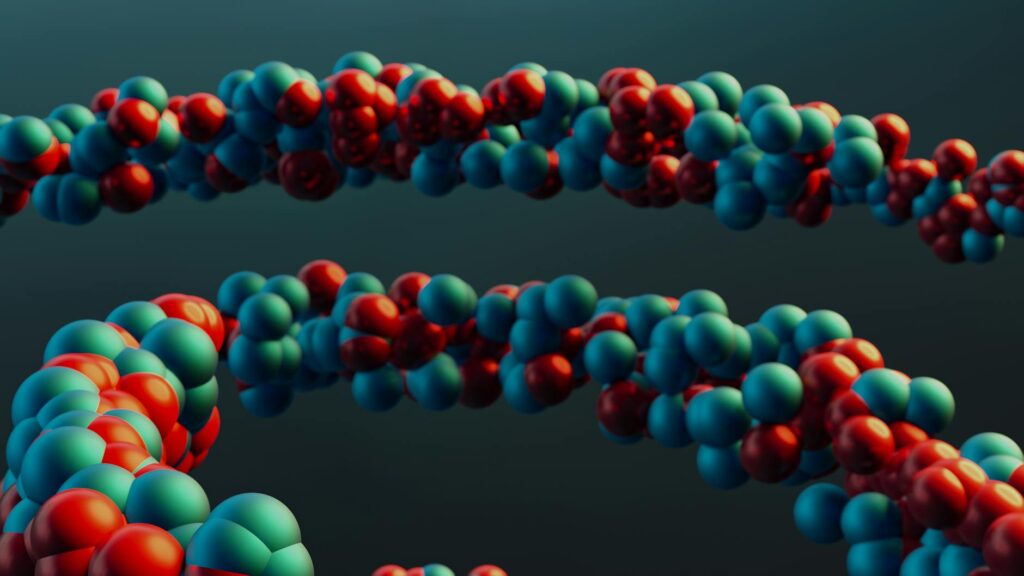
At its core, DNA is a long, complex molecule organized into a spiral staircase shape known as a double helix. This structure, famously discovered by James Watson and Francis Crick in 1953, is comprised of smaller building blocks called nucleotides. Each nucleotide consists of three parts: a phosphate group, a sugar molecule (deoxyribose), and one of four nitrogenous bases: adenine (A), guanine (G), cytosine (C), and thymine (T).
The ‘backbone’ of the DNA strand is formed by alternating phosphate and sugar molecules. The ‘rungs’ of the ladder are made by pairs of these nitrogenous bases. Crucially, these bases always pair up in a specific way: adenine (A) with thymine (T), and guanine (G) with cytosine (C). This A-T and G-C pairing is known as complementary base pairing and is fundamental to how DNA stores information and replicates itself.
How Does DNA Actually Work?
DNA’s primary function is to store genetic information. This information is encoded in the sequence of the bases (A, T, C, G) along the DNA strand. Think of it like a four-letter alphabet used to write the instructions for building and operating an organism. Different sequences spell out different instructions, much like different letter sequences form different words and sentences.
These instructions are organized into segments called genes. A gene is essentially a specific sequence of DNA that codes for a particular protein or a functional RNA molecule. Proteins are the workhorses of the cell, carrying out a vast array of functions, from building cellular structures to catalyzing biochemical reactions. The sequence of DNA bases in a gene determines the sequence of amino acids in the protein it codes for, which in turn dictates the protein’s structure and function.
How is DNA Copied? Understanding Replication
For life to continue and organisms to grow and reproduce, DNA must be copied accurately. This process is called DNA replication, and it’s a remarkably precise mechanism. It begins with an enzyme that unwinds the double helix, separating the two strands.
Each separated strand then serves as a template for building a new complementary strand. Free nucleotides in the cell nucleus are matched to their complementary bases on the template strand (A to T, G to C). Another enzyme, DNA polymerase, links these new nucleotides together, forming a new sugar-phosphate backbone. The result is two identical DNA molecules, each consisting of one original strand and one newly synthesized strand. This ‘semi-conservative’ replication ensures that genetic information is passed down faithfully from one generation of cells (or organisms) to the next.
From DNA to Protein: Transcription and Translation
DNA itself usually stays protected within the cell’s nucleus. To create proteins, the genetic code needs to be transcribed into a messenger molecule called messenger RNA (mRNA). This process, called transcription, occurs in the nucleus. An enzyme reads the DNA sequence of a gene and creates a complementary RNA strand, with one key difference: RNA uses uracil (U) instead of thymine (T) to pair with adenine (A).
Once transcribed, the mRNA molecule travels out of the nucleus into the cytoplasm, where it encounters ribosomes – the cell’s protein-making machinery. Here, the mRNA sequence is ‘translated’ into a sequence of amino acids. Transfer RNA (tRNA) molecules bring the correct amino acids to the ribosome, matching them to the mRNA codons (three-base sequences). This process continues until the entire gene’s message is translated into a complete protein. This entire DNA -> RNA -> Protein pathway is often referred to as the central dogma of molecular biology.
The human genome contains approximately 3 billion base pairs, and scientists estimate that there are around 20,000-25,000 protein-coding genes. (Source: National Human Genome Research Institute, 2023 data)
What’s New in DNA Science? Recent 2026 Developments
The field of DNA science is constantly evolving, with breakthroughs happening at an unprecedented pace. In 2026, we’re seeing major advancements in several key areas:
- CRISPR Gene Editing Refinements: While CRISPR technology has been around for a while, 2026 is seeing more precise and targeted applications. Researchers are developing new CRISPR systems with enhanced accuracy and reduced off-target effects, moving closer to therapeutic applications for genetic diseases. For instance, advancements in base editing and prime editing allow for single-letter changes in the DNA sequence without cutting both strands, offering greater safety.
- AI in Genomics: Artificial intelligence is revolutionizing how we analyze vast amounts of DNA data. In 2026, AI algorithms are becoming incredibly adept at identifying complex genetic patterns associated with diseases, predicting drug responses, and even designing novel proteins. Companies like DeepMind (an Alphabet company) continue to push the boundaries of what’s possible in protein folding prediction, which has direct implications for understanding DNA-encoded functions.
- Epigenetics and Personalized Medicine: Beyond the DNA sequence itself, epigenetics – changes that affect gene activity without altering the DNA sequence – is gaining prominence. In 2026, research is increasingly focused on how epigenetic modifications can be influenced by lifestyle and environment, and how they can be targeted for personalized treatments. Understanding these ‘switches’ allows for more nuanced approaches to health and disease.
- Long-Read Sequencing Technologies: Newer sequencing technologies, like those developed by Pacific Biosciences (PacBio) and Oxford Nanopore Technologies, are providing longer and more contiguous DNA reads. This is crucial for resolving complex genomic regions, understanding structural variations, and assembling complete genomes with greater accuracy, aiding in the diagnosis of rare genetic disorders.
Practical Applications of DNA Knowledge
Our understanding of DNA has profound practical implications across many fields:
| Application Area | How DNA Knowledge is Used | Key Entities/Examples |
|---|---|---|
| Medicine & Healthcare | Diagnosing genetic diseases, developing targeted therapies, personalized medicine, pharmacogenomics (how your genes affect drug response). | Genetic testing kits (e.g., 23andMe, AncestryDNA), gene therapies, cancer treatments. |
| Forensics | Identifying individuals from DNA samples at crime scenes, establishing paternity. | DNA fingerprinting, CODIS (Combined DNA Index System). |
| Agriculture | Developing disease-resistant crops, improving yields, creating genetically modified organisms (GMOs). | Biotechnology companies, specific crop varieties with enhanced traits. |
| Biotechnology & Research | Understanding fundamental biological processes, developing new tools and technologies, synthetic biology. | CRISPR-Cas9, PCR (Polymerase Chain Reaction), DNA sequencing machines. |
Frequently Asked Questions
What is the primary role of DNA?
The primary role of DNA is to store the genetic instructions required for the development, functioning, growth, and reproduction of all known organisms. It acts as the molecular blueprint for life, dictating inherited traits through the sequence of its base pairs.
Is DNA the same in everyone?
No, DNA is not the same in everyone, although identical twins share nearly identical DNA. The unique sequence of nucleotides in your DNA is what makes you an individual and determines your specific traits. Variations in DNA are the basis of genetic diversity.
How does DNA relate to genes?
Genes are specific segments of DNA that carry the instructions for building proteins or functional RNA molecules. Think of DNA as the entire instruction manual, and genes as individual chapters or recipes within that manual, each detailing how to make a specific component.
Can DNA be changed or edited?
Yes, DNA can be changed through natural mutations or deliberately edited using technologies like CRISPR-Cas9. While mutations can occur randomly, gene editing allows scientists to make precise alterations to DNA sequences, opening possibilities for treating genetic disorders.
Where is DNA found in a cell?
In eukaryotic cells (like human cells), the majority of DNA is found within the nucleus, organized into chromosomes. A small amount of DNA is also present in the mitochondria, organelles responsible for energy production within the cell.
The Future of Understanding DNA
As we continue to unravel the complexities of DNA and how it works, the possibilities for enhancing human health, understanding life’s origins, and even shaping the future of biology are immense. The ongoing research and technological advancements, particularly in areas like AI-driven analysis and precision gene editing, promise even more revolutionary discoveries in the coming years. My own journey into understanding genetics, starting with basic biology courses and progressing to following the latest research papers, has shown me just how dynamic and impactful this field truly is.
Last updated: April 2026.