
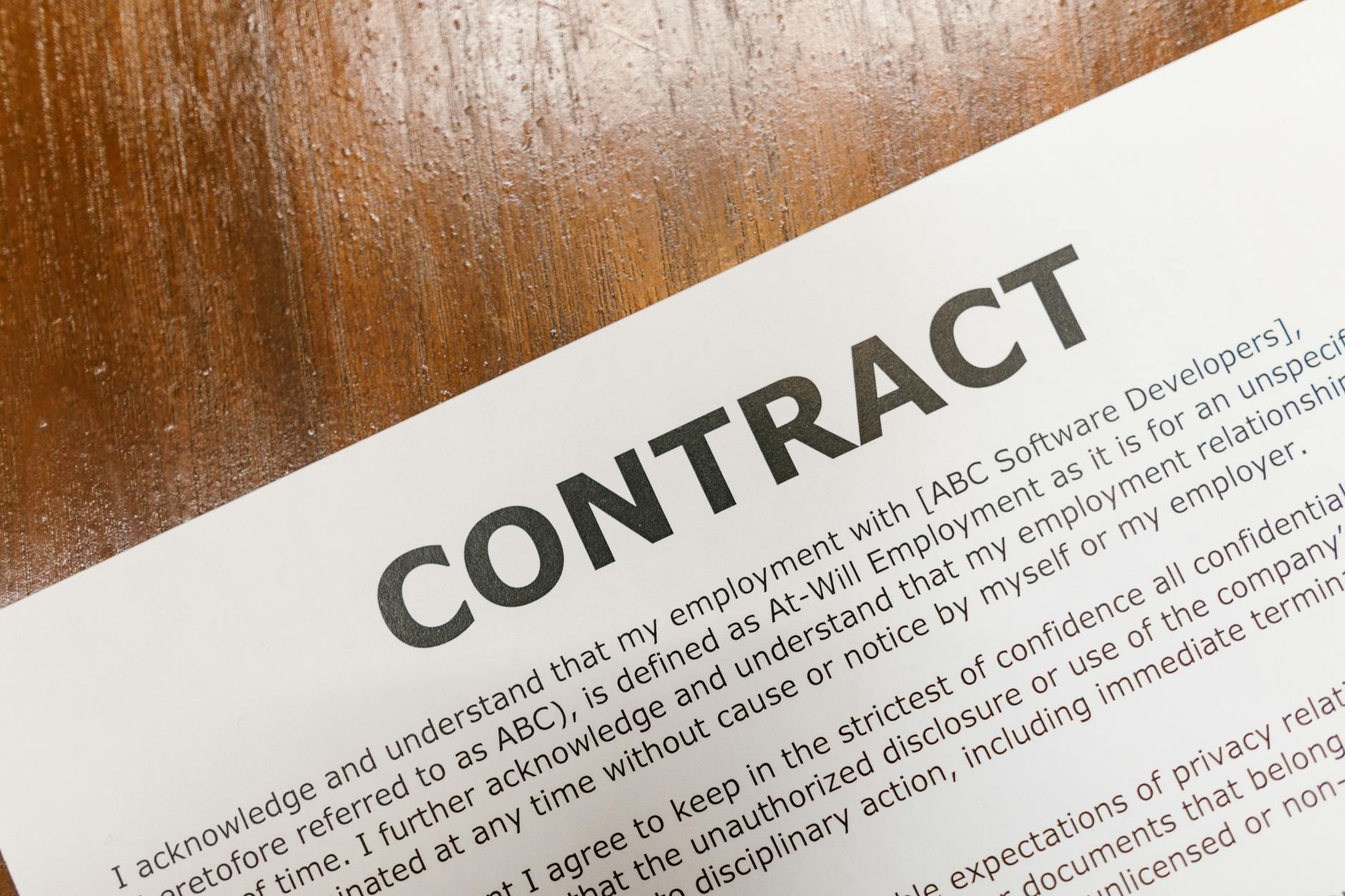
Law Basics: Understanding Contracts Simply
Ever felt like you’re signing your life away without truly understanding the paper in front of you? You’re not alone. Many of us encounter contracts daily – from phone plans and apartment leases to freelance gigs and online purchases – yet the legal jargon can feel intimidating. But what if I told you that grasping the core principles of contract law isn’t as complex as it seems? In my 10+ years of helping small businesses and individuals navigate agreements, I’ve seen firsthand how a little understanding can prevent big headaches.
This guide is designed to demystify law basics understanding contracts simply, breaking down what makes an agreement legally binding and how you can ensure your own deals are clear and fair. We’ll cover the essential building blocks, different types of contracts, and practical tips to help you feel more confident next time you’re asked to sign on the dotted line.
What Are the Essential Elements of a Contract?
At its heart, a contract is a legally enforceable agreement. For an agreement to be considered a contract, four fundamental elements must generally be present. Think of them as the ingredients needed for a valid contract recipe. If even one is missing, the agreement might not hold up in court.
First, there’s the offer. This is a clear proposal made by one party to another, indicating a willingness to enter into a bargain. It needs to be specific enough that the other party knows what they are agreeing to. For example, “I will sell you my car for $5,000.”
Second, there’s acceptance. This is the other party’s unqualified agreement to the terms of the offer. It must mirror the offer exactly. If you try to change the terms, it’s usually considered a counter-offer, not an acceptance. So, if someone offers to sell you a car for $5,000, saying “Okay, but I’ll give you $4,500” is a counter-offer.
Third is consideration. This is the ‘bargained-for exchange’ – what each party gives up or promises to give up. It’s the value exchanged between the parties. This could be money, goods, services, or even a promise to do or not do something. Without consideration, a promise is just a gift, not a contract.
Finally, there’s mutual assent (or a “meeting of the minds”) and capacity. Mutual assent means both parties understand and agree to the basic substance and terms of the contract. Capacity means the parties are legally competent to enter into a contract – they are of legal age and sound mind. For instance, a contract with a minor or someone who is severely intoxicated might be voidable.
Different Types of Contracts Explained
Contracts aren’t one-size-fits-all. They come in various forms, each suited to different situations. Understanding these distinctions can help you identify the right type of agreement for your needs.
Express Contracts are those where the terms are clearly stated, either orally or in writing. When you sign a lease agreement or agree to buy a specific service, that’s typically an express contract. Most business contracts fall into this category.
Implied Contracts are formed by the actions or conduct of the parties, rather than by explicit words. For example, if you go to a doctor, you implicitly agree to pay for their services, and they implicitly agree to provide competent medical care, even if you never explicitly discuss the payment terms beforehand.
Unilateral Contracts involve a promise by one party in exchange for an act by the other party. A classic example is a reward offer: “I’ll pay $100 to whoever finds my lost dog.” The contract is formed only when someone actually finds and returns the dog.
Bilateral Contracts are the most common type. They involve mutual promises between two parties. “I promise to pay you $1,000” (promise) “if you promise to paint my fence” (promise). Both parties are bound by their promises.
There are also valid, void, voidable, and unenforceable contracts. A valid contract meets all legal requirements. A void contract is invalid from the start (e.g., a contract for an illegal act). A voidable contract can be affirmed or rejected by one of the parties (e.g., a contract entered into under duress). An unenforceable contract might be valid in substance but cannot be enforced by a court due to a technicality, like the statute of limitations expiring.
How to Make a Legally Binding Agreement
Creating an agreement that’s legally binding doesn’t require a law degree, but it does require attention to detail. My experience has shown that clarity and completeness are your best allies.
First, ensure you have all four essential elements: offer, acceptance, consideration, and capacity. Without these, you don’t have a contract.
Second, put it in writing whenever possible. While oral contracts can be legally binding for certain types of agreements (depending on jurisdiction and subject matter), written contracts provide a clear record and are much easier to prove. The Statute of Frauds in many places requires certain contracts, like those involving real estate or agreements that cannot be performed within one year, to be in writing.
Third, be specific. Avoid vague language. Clearly define the parties involved, the goods or services being exchanged, the price, the timeline for performance, and any specific conditions or warranties. For example, instead of “deliver goods soon,” specify “deliver goods by March 15, 2026.” I often advise clients to use a checklist to ensure all critical points are covered.
Fourth, ensure both parties understand and agree to the terms. This means avoiding any form of misrepresentation, fraud, duress, or undue influence. If someone feels pressured or misled, the contract may be voidable.
Finally, both parties should sign the agreement. This signature signifies their intent to be bound by the terms. If it’s an electronic contract, ensure you’re following proper e-signature protocols.
Common Contract Mistakes to Avoid
Even with the best intentions, people often make mistakes when creating or entering into contracts. Being aware of these pitfalls can save you significant trouble down the line.
One of the most common mistakes is assuming an oral agreement is ironclad. As mentioned, while some oral contracts are valid, they are incredibly difficult to prove. Relying solely on verbal agreements for significant transactions is risky.
Another frequent error is vague or ambiguous language. This is a breeding ground for disputes. What one party thinks is implied, the other might not. For instance, a contract for “consulting services” without defining the scope, deliverables, or hours can lead to disagreements about what was actually promised.
Failing to read the fine print is a classic. Many people skim or skip the detailed clauses, only to discover later that they’ve agreed to unfavorable terms, automatic renewals, or strict penalties. I learned this the hard way when I first started my own business and signed a software agreement without fully understanding the data ownership clauses.
Not understanding the other party’s capacity or authority is another issue. Are you dealing with the person who actually has the power to make this agreement for their company? Signing with someone who lacks authority can render the contract invalid.
Finally, failing to get everything in writing for significant agreements is a major oversight. If it’s important enough to discuss, it’s important enough to document clearly.
Why Are Contracts Important in Business?
In the business world, contracts are the bedrock of operations. They provide clarity, define expectations, and offer legal recourse if things go wrong. Without them, business relationships would be built on shaky ground.
Contracts clearly outline the rights and responsibilities of each party involved. This includes defining the scope of work, payment terms, delivery schedules, and quality standards. This clarity minimizes misunderstandings and sets a clear path for collaboration.
They establish a framework for dispute resolution. Many contracts include clauses specifying how disagreements will be handled, such as through mediation, arbitration, or litigation. This pre-defined process can save time and money if conflicts arise.
Contracts also protect intellectual property and confidential information. Specific clauses can prevent parties from sharing trade secrets or using proprietary information inappropriately.
According to a 2023 survey by the American Bar Association, 75% of small businesses reported that having clear, written contracts significantly reduced the number of legal disputes they encountered.
Furthermore, well-drafted contracts can help manage risk. By anticipating potential problems and outlining contingency plans, businesses can better prepare for unforeseen circumstances. For example, a force majeure clause can excuse performance due to events beyond a party’s control, like natural disasters.
Essentially, contracts provide a sense of security and predictability. They allow businesses to enter into agreements with confidence, knowing that their interests are legally protected. This is why even for simple transactions, having a basic understanding of law basics understanding contracts simply is invaluable.
Frequently Asked Questions
What is the difference between a contract and an agreement?
An agreement is a mutual understanding between two or more parties. A contract is a specific type of agreement that is legally enforceable by law, containing essential elements like offer, acceptance, consideration, and mutual intent.
Can a verbal contract be legally binding?
Yes, in many situations, verbal contracts can be legally binding. However, they are difficult to prove, and certain types of contracts (like those involving real estate) must be in writing to be enforceable under the Statute of Frauds.
What happens if one party breaches a contract?
A breach of contract occurs when one party fails to fulfill their obligations. The non-breaching party may have legal remedies, such as seeking damages (monetary compensation) or specific performance (forcing the breaching party to fulfill the contract).
How long does a contract typically last?
The duration of a contract depends entirely on its terms. Some contracts are for a single transaction, while others might be for a set period (e.g., one year) or continue until a specific event occurs or is terminated by either party according to its provisions.
What is ‘consideration’ in contract law?
Consideration is the value exchanged between parties in a contract. It’s what each party gives up or promises to give up. This can be money, goods, services, or a promise to do or not do something, forming the basis of the bargain.
Ready to Draft Your Next Agreement with Confidence?
Understanding the basics of contract law empowers you to enter into agreements with greater certainty and protection. By focusing on clear terms, essential elements, and avoiding common pitfalls, you can ensure your contracts serve their intended purpose effectively. Remember, while this guide provides foundational knowledge, complex situations often benefit from professional advice.
Don’t let confusing legal language hold you back. Start applying these principles today to make your future agreements clearer and more secure. For more on navigating the legal side of business, explore our resources on intellectual property basics.