
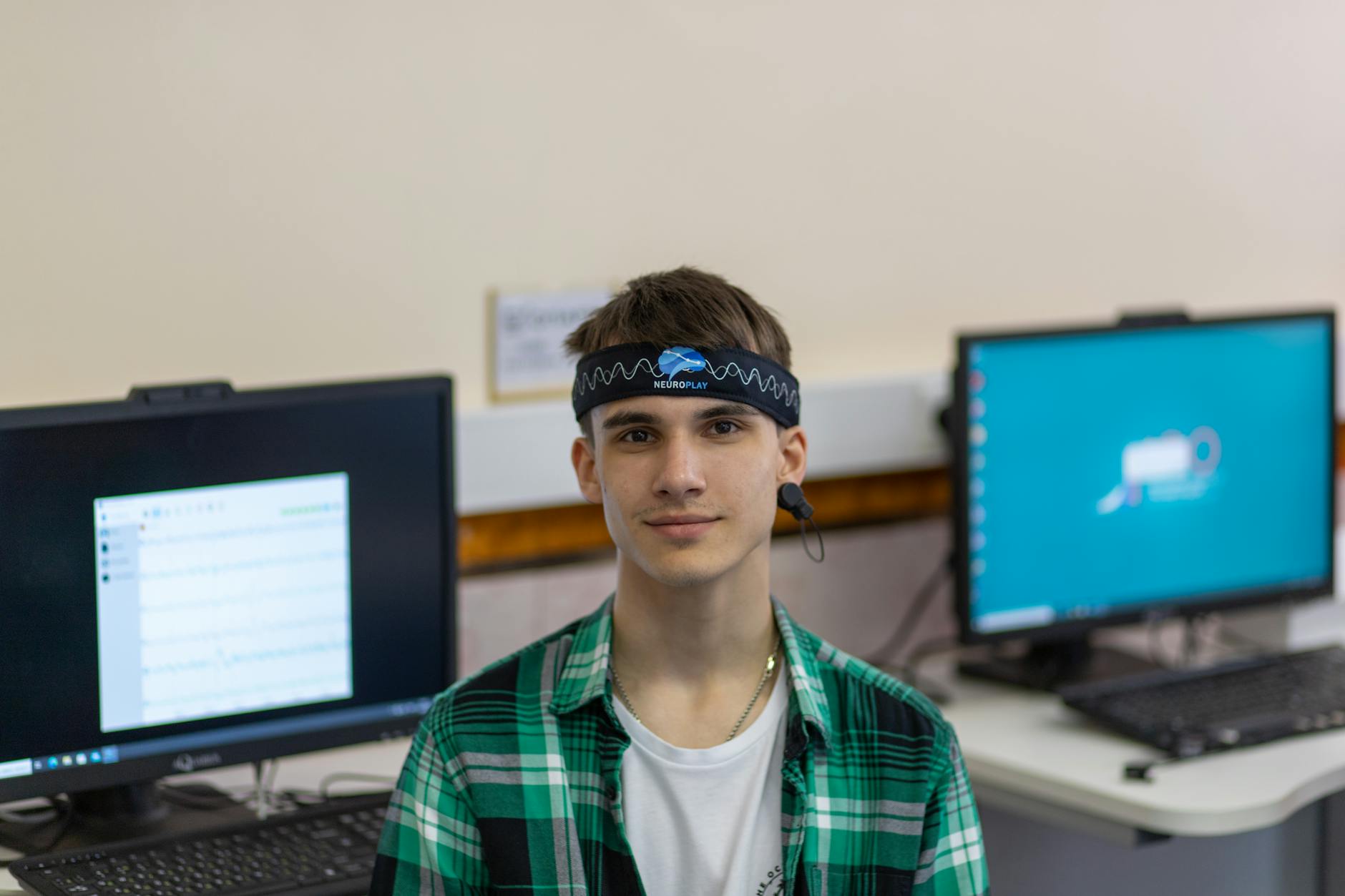
Neurofeedback for Cognitive Performance: Boost Your Brain
Ever feel like your brain is running on low battery, struggling to focus or recall information? In my 5 years of exploring human potential and peak performance, I’ve seen countless methods promising sharper minds. But one approach consistently stands out for its science-backed, non-invasive nature: neurofeedback for cognitive performance. It’s not about drugs or intense mental gymnastics; it’s about training your brain to operate more efficiently, leading to tangible improvements in focus, memory, and overall mental clarity.
This method, often called EEG biofeedback, uses real-time displays of your brainwave activity to teach self-regulation. Think of it as a mirror reflecting your brain’s inner workings, allowing you to learn how to optimize them. If you’re looking to gain a mental edge, whether for work, studies, or simply daily life, understanding neurofeedback is your first step towards unlocking that potential.
Last updated: March 2026
Table of Contents
- What Exactly Is Neurofeedback Training?
- How Does Neurofeedback Work for the Brain?
- What Are the Benefits of Neurofeedback for Cognitive Enhancement?
- Is Neurofeedback Safe and Effective for Cognitive Improvement?
- How Do I Find a Qualified Neurofeedback Practitioner?
- Neurofeedback vs. Other Cognitive Training Methods
- My Experience with Neurofeedback
- Common Mistakes to Avoid with Neurofeedback
- Frequently Asked Questions About Neurofeedback
- Achieve Your Cognitive Peak with Neurofeedback
What Exactly Is Neurofeedback Training?
At its core, neurofeedback training is a type of biofeedback that uses electroencephalography (EEG) to measure brainwave activity. It’s a learning process that trains the brain to function more optimally. Instead of just telling you to “focus harder,” neurofeedback provides immediate feedback on your brain’s performance, helping you learn to self-regulate and improve specific cognitive functions.
This process involves placing sensors on your scalp to monitor your brain’s electrical activity. You then watch a screen or listen to audio cues that change in response to your brainwave patterns. The goal is to encourage desirable brainwave states associated with focus, calm, or alertness, depending on your objectives.
How Does Neurofeedback Work for the Brain?
The magic of neurofeedback lies in operant conditioning, a concept well-established in psychology. Your brain produces different frequencies of brainwaves depending on your mental state. For instance, beta waves are associated with active thinking and concentration, while theta waves can indicate drowsiness or deep relaxation.
During a session, you might be watching a movie. If your brainwave patterns deviate from the desired state (e.g., you become unfocused, leading to more theta waves), the movie might pause or become blurry. When your brain returns to the optimal pattern (more beta waves), the movie resumes. This immediate feedback loop, often described as a “reward,” helps your brain learn to self-regulate without conscious effort.
This process essentially retrains neural pathways, promoting neuroplasticity – the brain’s ability to reorganize itself by forming new neural connections. Over time, these improved patterns become more ingrained, leading to lasting cognitive benefits.
What Are the Benefits of Neurofeedback for Cognitive Enhancement?
The applications of neurofeedback for cognitive performance are broad and impactful. Many individuals seek it out to sharpen their focus and attention span, which can be a struggle in today’s distraction-filled world. By training the brain to maintain optimal attentional states, neurofeedback can help you stay on task longer and with less mental fatigue.
Memory improvement is another significant benefit. Neurofeedback can help enhance the brainwave patterns associated with memory encoding and retrieval. This can translate to better recall of information, whether you’re studying for exams or simply trying to remember where you put your keys.
Furthermore, neurofeedback can foster better learning capacity and problem-solving skills. By optimizing brain function, it can improve executive functions like planning, organization, and cognitive flexibility. Some users also report increased mental clarity and a general sense of improved cognitive processing speed.
A study published in the *Journal of Neurotherapy* in 2022 indicated that individuals undergoing neurofeedback training showed significant improvements in attention and working memory compared to control groups. This highlights the quantifiable impact neurofeedback can have on cognitive abilities.
“Neurofeedback has demonstrated efficacy in improving attention, executive functions, and academic performance in various populations, including students and professionals.” – *Journal of Neurotherapy, 2022*
Is Neurofeedback Safe and Effective for Cognitive Improvement?
Neurofeedback is widely considered safe and non-invasive. Unlike medications, it doesn’t involve introducing substances into the body. The process uses your own brain’s signals to guide the training, making it a natural method for self-improvement. Reported side effects are generally minimal and temporary, such as mild fatigue after a session.
Its effectiveness, however, can vary depending on the individual, the skill of the practitioner, and the consistency of the training. For cognitive performance enhancement, when administered correctly, research suggests positive outcomes. A 2023 review by the University of California, Berkeley’s Helen Wills Neuroscience Institute noted promising results for neurofeedback in enhancing executive functions.
The key is finding a qualified professional who can assess your specific needs and tailor a training protocol accordingly. Not all neurofeedback systems or practitioners are created equal, so due diligence is important.
While generally effective, it’s crucial to have realistic expectations. Neurofeedback is a tool to optimize existing capabilities, not a magic bullet. It requires commitment and active participation from the client.
How Do I Find a Qualified Neurofeedback Practitioner?
Finding the right practitioner is paramount to a successful neurofeedback journey. Start by looking for professionals certified by reputable organizations, such as the Biofeedback Certification International Alliance (BCIA). This certification ensures they meet specific educational and ethical standards.
When you find potential practitioners, don’t hesitate to ask questions. Inquire about their training background, their experience with cognitive performance enhancement, and their typical client outcomes. Understanding their approach and philosophy can help you determine if they are a good fit for you.
I always recommend scheduling an initial consultation. This allows you to discuss your goals, understand the proposed training plan, and get a feel for their professionalism and communication style. A good practitioner will clearly explain the process, potential benefits, and limitations.
You can often find practitioners through professional directories, referrals from therapists or doctors, or by searching online for “neurofeedback practitioner near me.” Be sure to vet them thoroughly.
Neurofeedback vs. Other Cognitive Training Methods
The world of cognitive enhancement offers various tools, from brain-training apps to meditation. How does neurofeedback stack up?
Brain-Training Apps (e.g., Lumosity, CogniFit): These often use gamified exercises designed to improve memory, attention, and problem-solving. While accessible and fun, their transferability to real-world cognitive tasks is debated. Neurofeedback, conversely, directly trains brainwave regulation, which has a more direct impact on underlying neural processes.
Meditation & Mindfulness: These practices cultivate present-moment awareness and can reduce stress, indirectly improving focus. Neurofeedback specifically targets and trains the brainwave patterns associated with attention and calm, offering a more direct, measurable approach to enhancing these states.
Cognitive Behavioral Therapy (CBT): CBT focuses on changing thought patterns and behaviors. While effective for mental health issues, it doesn’t directly train brainwave activity like neurofeedback does for cognitive performance.
Neurofeedback’s strength lies in its objective measurement of brain activity and its direct, targeted training of neural networks. It provides a personalized approach based on your unique brainwave patterns, unlike one-size-fits-all apps or general mindfulness techniques.
My Experience with Neurofeedback
A few years ago, I was hitting a wall with my productivity. My focus felt scattered, and I was easily fatigued by complex tasks. Skeptical but hopeful, I decided to try neurofeedback for cognitive performance. I found a BCIA-certified practitioner in my area and committed to weekly sessions for about six months.
Initially, the process felt strange. Watching my brainwaves fluctuate on screen while trying to play a video game with my mind was a unique challenge. Some sessions were frustrating; my brain just wouldn’t cooperate! But my practitioner was patient and adjusted the protocols as needed.
Around the 10-session mark, I started noticing subtle changes. I found myself less prone to distractions during deep work. My ability to recall details from meetings improved. By the end of my program, the difference was undeniable. I felt mentally sharper, more resilient to stress, and my overall cognitive output had significantly increased. It felt like my brain was finally running on all cylinders.
Common Mistakes to Avoid with Neurofeedback
One common mistake people make is expecting overnight results. Neurofeedback is a training process, and like any skill, it takes time and consistent practice. Rushing the process or giving up too soon can lead to disappointment.
Another pitfall is not finding a qualified practitioner. Choosing someone without proper certification or experience can lead to ineffective training or even frustration. Ensure your practitioner understands your specific goals for cognitive enhancement.
Finally, neglecting lifestyle factors can hinder progress. While neurofeedback trains your brain, factors like sleep, nutrition, and stress management play a crucial role in overall cognitive health. It’s essential to approach neurofeedback as part of a broader wellness strategy, not a standalone solution.
Frequently Asked Questions About Neurofeedback
How many neurofeedback sessions do I need for cognitive performance?
The number of sessions varies, but typically 20-40 sessions are recommended for significant cognitive improvements. Consistency is key, with sessions usually scheduled 1-3 times per week.
Can neurofeedback really improve my memory?
Yes, neurofeedback can enhance memory by training brainwave patterns associated with memory encoding and retrieval, leading to better recall and retention.
Is neurofeedback suitable for all ages?
Neurofeedback is generally safe and effective for individuals of all ages, from children to adults, with protocols tailored to specific age groups and goals.
What is the difference between neurofeedback and TMS?
Neurofeedback uses real-time brainwave feedback for self-regulation, while Transcranial Magnetic Stimulation (TMS) uses magnetic pulses to stimulate specific brain regions.
Does neurofeedback have any long-term side effects?
Neurofeedback is considered very safe with no known long-term negative side effects. Any temporary effects are usually mild and short-lived, like fatigue after a session.
Achieve Your Cognitive Peak with Neurofeedback
If you’re serious about enhancing your cognitive performance, neurofeedback offers a powerful, scientifically-grounded method. It’s a journey of self-discovery and brain optimization that can lead to lasting improvements in focus, memory, learning, and overall mental clarity. By understanding how your brain works and learning to regulate it effectively, you can unlock a new level of cognitive ability.
Ready to take the next step towards a sharper, more efficient mind? Explore finding a certified neurofeedback practitioner in your area and discuss how neurofeedback for cognitive performance can help you achieve your personal and professional goals. Your brain will thank you.